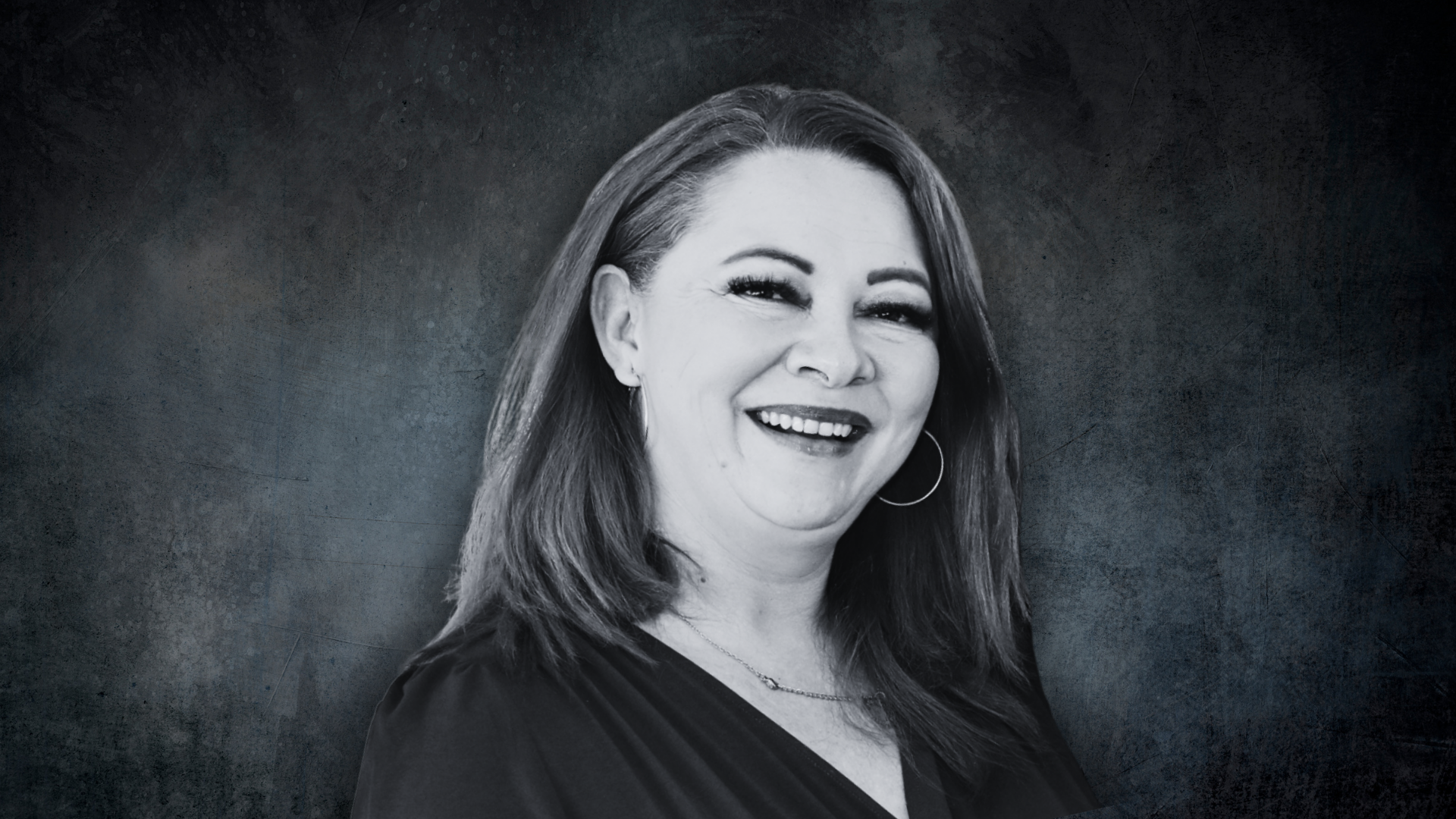
In Conversation with Candace Laubscher, Chief Marketing Officer of VEA Group
In many organisations, marketing was once treated largely as a downstream communications function. The business made its decisions; marketing was tasked with packaging the message and taking it to market. That model is rapidly becoming obsolete.
For Candace Laubscher, Chief Marketing Officer of VEA Group, modern marketing leadership is not simply about visibility. It requires understanding a business deeply enough to influence where it goes, how it competes, what it becomes known for and, ultimately, whether people trust it.
That distinction is particularly important inside a diversified group such as VEA, where businesses operate across markedly different industries, audiences and customer experiences. Laubscher’s own journey into executive leadership is similarly unconventional. It is a story shaped by reinvention, persistence and a willingness to enter unfamiliar territory and learn.
The Unexpected Route to The C-Suite
Laubscher is candid that her career did not begin with a perfectly mapped-out destination. A strong student earlier in life, circumstances and decisions changed the trajectory of her final school years. Her matric results did not reflect what she believed she was capable of, and that experience stayed with her.
She married, became a mother to three children and continued carrying an ambition to pursue higher education. At the same time, she was still discovering where her professional strengths would ultimately take her.
“I was very much a dream generalist,” she says. “I could fit in anywhere.”
For years, that ability to adapt meant she could succeed in many different environments without feeling that she had found one definitive professional calling. That changed in her late twenties when she discovered marketing.
She began studying marketing while simultaneously working in the field, and for the first time the different parts of her professional identity came together. Marketing gave her the variety she craved, creativity, strategy, commercial thinking, problem-solving and continual learning, and she had found the career she was passionate about.
What had once looked like a lack of a defined professional lane would ultimately become one of her greatest strengths.
Laubscher could move between environments, learn quickly, and adapt. She discovered that she thrived on variety: new problems, new industries, new responsibilities, and opportunities that demanded growth.
Even when she spent several years within the same organisation, she was rarely doing the same job for long. Progression meant continually taking on greater responsibility and developing new capabilities.
That appetite for growth took her through corporate environments, an international organisation back to corporate and eventually to VEA Group, a move she now describes as one of the best decisions of her career.
“I always find that when you put yourself in an uncomfortable situation, that’s where you grow the most,” she says. It is a principle that has shaped not only her career but also the way she leads.
Marketing’s Seat at The Table
For Laubscher, the evolution of marketing from a communications support function to a strategic business discipline is not theoretical. It is increasingly visible in the expectations placed on marketing leaders.
McKinsey’s research into the changing role of the CMO has highlighted the importance of embedding marketing leadership in strategic decision-making and customer-centric growth. For Laubscher, that means a CMO cannot afford to understand only campaigns, social media, or brand guidelines.
A modern marketing leader needs to understand the customer, the commercial model, the culture, reputation, technology, operations, risk, and the organisation’s broader strategic ambitions. At VEA Group, that requirement is amplified by the diversity of the portfolio.
One conversation may concern food manufacturing. The next may involve infrastructure, financial services, insurance, technology, hospitality or another sector entirely. The marketing function therefore needs to understand not only how to communicate with each business but also what drives that business commercially.
Laubscher describes her team as deliberately lean relative to the breadth of the Group’s portfolio. This model depends on agility, judgement, accountability, and an ownership mindset. Her role is not to become the point through which every marketing decision must pass. It is to create frameworks, capabilities, and strategic clarity that allow teams and businesses to move quickly without losing alignment.
That is a very different definition of marketing leadership.
One Group. Many Brands.
A diversified group presents a particular brand challenge: how do you create coherence without forcing every company to look, sound and behave the same?
For Laubscher, the answer begins with culture.
VEA Group operates through independently led businesses within a shared culture and operating philosophy. That creates an important distinction for marketing. The objective is not to make every company look like VEA Group.
It is to build the strongest possible version of each individual brand while ensuring that the standards, values, and thinking behind those businesses remain aligned. A customer may encounter two completely different businesses within the group and have two very different brand experiences. That is appropriate. Their markets, customers, and propositions are different.
What should remain recognisable is the underlying standard: how the business thinks, how it delivers, and how seriously it takes its commitments. Each brand, therefore, needs enough autonomy to communicate credibly with its own market while remaining connected to the broader principles of the Group.
For Laubscher, this is where brand strategy and business strategy become inseparable.
Positioning cannot simply be imposed by a central marketing team. It has to reflect the commercial reality of the business underneath it: what it does well, who it serves, where it wants to compete, and what promise it can genuinely deliver.
Trust Cannot Be Manufactured
In an era of unprecedented visibility, trust has become both more valuable and more difficult to earn. Research published by Cvent in 2026 found that the rapid rise of AI-generated content is contributing to growing audience skepticism and making trust more difficult for marketers to establish. But technology is only part of the shift.
Social media has fundamentally changed the balance of power between organisations and their audiences. Businesses no longer have complete control over the story told about them. Customers, employees, and stakeholders can expose the distance between a brand’s promise and the experience it delivers almost instantly.
“People cannot be fake anymore,” Laubscher says. “The public keeps organisations accountable.”
For her, that makes reputation inseparable from operations.
A brand promise cannot live exclusively in advertising.
If a company promises quality, value, reliability, or exceptional service, that promise has to survive in contact with the actual customer experience. It must be evident in the product, delivery, employee behaviour, operational decisions, and every significant interaction with the business. Marketing may articulate promises. The organisation has to fulfil it.
That is why trust and visibility are fundamentally different. Visibility can be bought. Trust has to be earned.
AI Doesn’t Replace Judgement
Few developments are reshaping marketing as quickly as artificial intelligence.
Laubscher is optimistic about its potential. Rather than viewing AI primarily as a threat to marketing roles, she sees it as an enabler, particularly lean teams expected to deliver across large and complex portfolios. AI can dramatically increase the capacity of marketers to research, analyse, develop ideas, interrogate information and accelerate execution.
That matters when a small team is expected to operate at scale. Routine and repetitive work can increasingly be automated or accelerated, giving marketers more time to focus on the work that requires context, creativity, commercial understanding and judgement.
But there is a boundary Laubscher considers non-negotiable. Human beings must remain in the loop.
The strategic question is therefore not whether AI will replace marketers. It is whether marketers will learn to use AI effectively while continuing to develop the skills technology cannot replace easily: judgement, curiosity, empathy, commercial understanding, strategic thinking and the ability to distinguish between output that is merely plausible and work that is genuinely right. For Laubscher, AI increases the importance of those abilities rather than diminishing them.
The Courage to Keep Becoming
When asked what she would tell the next generation of women aspiring to senior leadership, Laubscher’s advice begins with one idea: invest in yourself.
Education was one of the most important investments she made.
Returning to study later in life while raising a family required discipline, but it also allowed her to rewrite a story she had carried since school. The matric results that once seemed to define her were not the end of her academic journey. She went on to return to higher education and graduate cum laude.
For Laubscher, however, education extends far beyond a qualification.
It is a commitment to remaining teachable. Her career has repeatedly required her to step into situations before she had every answer. Rather than allowing that uncertainty to stop her, she learned to trust her ability to figure things out.
“Never say no,” she says. “There’s nothing you can’t learn.”
This philosophy is less about accepting every opportunity indiscriminately than it is about refusing to let a lack of familiarity become a barrier to growth. Her own trajectory reflects that belief.
The young woman whose academic results did not reflect her potential returned to education and excelled. The generalist who spent years searching for the right professional fit discovered marketing in her late twenties and turned it into a career that brought together her appetite for learning, creativity, strategy, and commercial thinking.
The mother who pursued her education while raising a family proved that professional and academic growth do not have to follow a conventional timeline. And the executive who could have remained comfortable in an established corporate career chose instead to enter an environment that would demand more of her.
Today, as Chief Marketing Officer of VEA Group, Laubscher occupies a role at the intersection of reputation, strategy, customer experience, technology, brand and commercial growth.
In many ways, her own career evolution mirrors the evolution of marketing itself. The profession is no longer simply responsible for making businesses visible.
Increasingly, its most important responsibility is helping businesses become believable. For Candace Laubscher, that may be the real work of modern marketing leadership and the work worth doing.