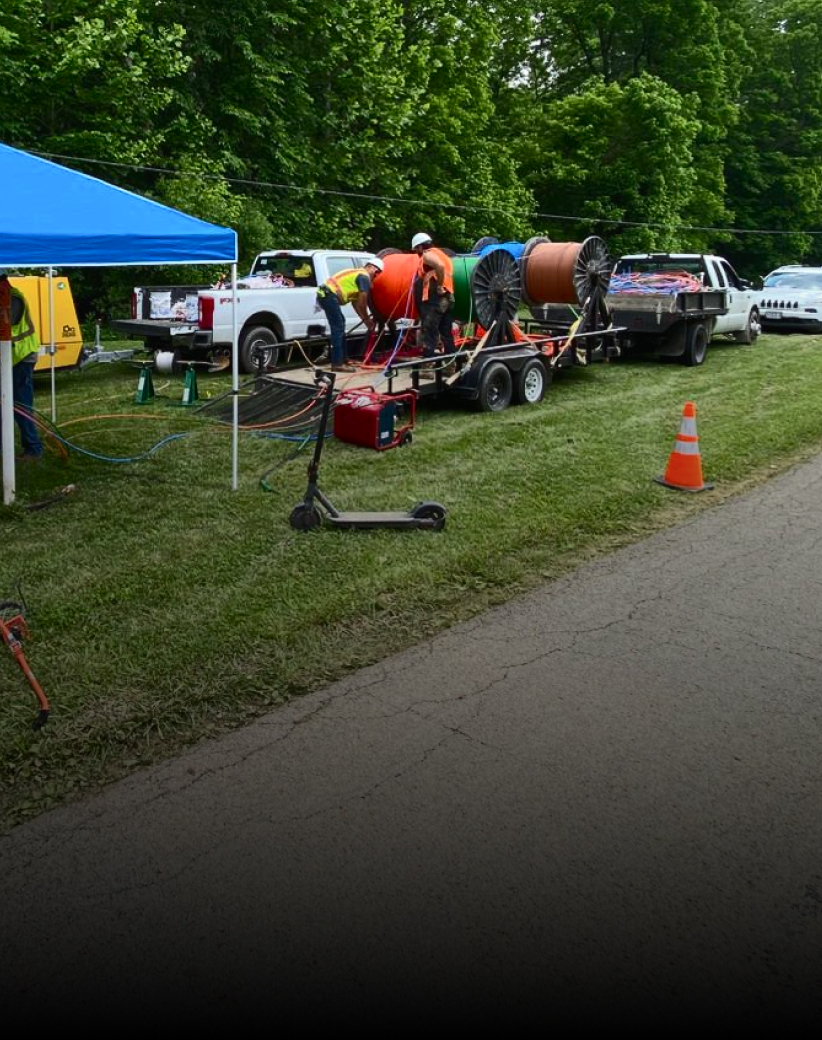
Discover why fibre infrastructure has become essential economic infrastructure powering AI, smart cities, enterprise growth and digital economies globally.
Fibre infrastructure has become one of the most important forms of economic infrastructure in the modern digital economy. What was once viewed primarily as telecommunications infrastructure is now enabling artificial intelligence, smart cities, enterprise growth, remote work, healthcare systems, streaming platforms and digital education at a global scale.
As governments and enterprises increase investment into digital infrastructure across South Africa, the United States and the United Kingdom, fibre infrastructure is rapidly becoming as essential as roads, ports and power grids. The future competitiveness of economies increasingly depends on resilient, high-performance fibre networks capable of supporting uninterrupted connectivity, enterprise growth and long-term digital transformation. The conversation has fundamentally shifted. This is no longer about connectivity alone. It is about economic capability.
Fibre Infrastructure Is Becoming Economic Infrastructure
Throughout history, economic leadership has been shaped by infrastructure investment. Railroads transformed industrial economies. Electricity enabled manufacturing revolutions. Highways reshaped commerce and mobility.
Today, fibre infrastructure is performing the same role for the digital economy. The countries and enterprises investing aggressively into fibre network infrastructure are positioning themselves to lead in artificial intelligence, cloud computing, fintech, healthcare innovation and enterprise connectivity.
The pattern is clear: lasting economic ecosystems are built on infrastructure systems that compound value over decades. Fibre infrastructure has now entered that category globally.
As AI adoption accelerates, the importance of fibre infrastructure is increasing dramatically. AI systems require extraordinary data movement, ultra-low latency and uninterrupted connectivity. Cloud environments, enterprise automation and real-time analytics all depend on fibre infrastructure operating reliably beneath the software layer. The same applies to remote work and enterprise growth.
The global workforce is now cloud-based, geographically distributed and digitally dependent. Businesses increasingly rely on stable, high-capacity connectivity to support collaboration, operations and productivity across multiple locations.
The Role of Fibre Infrastructure in Smart Cities and Digital Economies
Modern smart city infrastructure depends entirely on resilient fibre networks capable of operating continuously at scale. From traffic management systems and public safety networks to healthcare platforms, education technology, financial transactions, streaming services and autonomous systems, nearly every aspect of modern digital society now relies on high-performance connectivity.
This is becoming increasingly important across Africa, the United Kingdom and the United States, where governments and enterprises are accelerating investment into broadband infrastructure expansion and enterprise connectivity. In South Africa specifically, fibre infrastructure is playing a growing role in economic participation, digital inclusion and enterprise competitiveness.
As digital economies continue evolving, it is becoming clear that long-term growth cannot be sustained without resilient underlying infrastructure capable of supporting uninterrupted connectivity.
Why Fibre Network Maintenance Matters More Than Ever
One of the greatest misconceptions in fibre deployment is that value lies primarily in construction. In reality, long-term economic performance depends on maintenance discipline. Fibre infrastructure is not static; it is a living operational ecosystem requiring continuous optimisation, monitoring and restoration capability. As fibre infrastructure expands globally, network operators are facing increasing pressure around SLA performance, restoration speed, fault response times, preventative maintenance, route resilience, 24/7 operational support and long-term infrastructure reliability. This pressure is intensifying significantly in the USA’s fibre infrastructure market, where the scale of broadband expansion currently underway is unprecedented. Public and private capital continues flowing into last-mile connectivity, AI infrastructure, hyperscale data ecosystems and fibre network expansion. But expansion alone does not create resilience.
As networks grow denser, operational complexity increases, while labour shortages, ageing infrastructure, weather events and rising uptime expectations place enormous pressure on infrastructure delivery ecosystems. The challenge is no longer simply whether fibre infrastructure can be built, but whether it can be maintained at world-class performance levels over decades. That distinction matters because economies do not fail during expansion cycles; they fail when critical infrastructure becomes unreliable.
Infrastructure Resilience and SLA Performance
Governments and enterprises alike are increasingly recognising that fibre infrastructure resilience directly impacts national competitiveness, as healthcare systems, financial platforms, education networks, supply chains and even broader social and economic stability now depend on digital infrastructure operating continuously. As a result, the future belongs not merely to contractors, but to disciplined infrastructure ecosystems capable of delivering rapid fibre deployment, precision execution, scalable maintenance, operational resilience, restoration excellence and long-term asset stewardship. The infrastructure companies that endure will not be defined by volume alone but by consistency.
The Rise of Integrated Fibre Infrastructure Ecosystems
As fibre infrastructure markets mature globally, competitive advantage is shifting away from pure construction capability toward execution systems built on operational discipline, leadership, process engineering and long-term consistency. Scaling fibre deployment and maintenance across regions now requires far more than technical capability, with the strongest infrastructure ecosystems increasingly resembling high-performance operating systems rather than traditional contractors.
Across Africa, the United Kingdom and the United States, organisations are being forced to rethink what sustainable fibre infrastructure delivery actually requires. Not fragmented subcontracting models, reactive maintenance or short-term deployment thinking, but integrated ecosystems capable of managing the full infrastructure lifecycle, from civils and fibre deployment through to restoration, SLA performance and network assurance.
VEA Group is a disciplined infrastructure delivery and maintenance ecosystem, having built an integrated platform spanning fibre deployment, civils, maintenance and operational support across South Africa, the United Kingdom and the USA through businesses including VEA Connect USA, VEA Group UK, VEA Telecoms and VCom.
Fibre Infrastructure and the Future of Economic Growth
At VEA Group, we understand that infrastructure cycles are measured in decades, not quarters. That is why we have built our business around operational resilience, maintenance-first thinking, integrated delivery capability and an uncompromising focus on uptime and restoration speed. As artificial intelligence, automation, smart city infrastructure and enterprise digitisation continue accelerating globally, we believe the future economy will depend not simply on technology itself, but on the infrastructure systems capable of keeping that technology operating continuously.
Through our expanding operations across South Africa, the United Kingdom and the United States, we are committed to building disciplined infrastructure ecosystems designed for long-term reliability, scalability and performance. If your organisation is looking for a partner capable of delivering resilient fibre infrastructure and operational excellence at scale, connect with the team at VEA Group to learn how we can help build and maintain the networks powering the future.