Discover why diversified conglomerates such as Berkshire Hathaway, Tata Group and Samsung are outperforming through economic resilience, strategic diversification and ecosystem building.
In a Volatile World, Resilience Has Become the Ultimate Competitive Advantage
Over the past decade, global markets have exposed the fragility of over-specialised business models. Supply chain disruptions, inflationary pressures, geopolitical instability, infrastructure constraints, labour volatility, and rapid technological advancement have fundamentally changed how long-term resilience is measured.
In this environment, growth alone is no longer enough.
Increasingly, the organisations outperforming across economic cycles are those capable of absorbing shocks, reallocating capital efficiently, and operating through interconnected ecosystems rather than isolated business units.
This is one of the reasons diversified conglomerates are re-emerging as some of the most resilient and strategically significant business models in the global economy.
Many of the world’s most enduring organisations, including Berkshire Hathaway, Tata Group, Reliance Industries, Samsung Group, and Mitsubishi Corporation, have demonstrated that long-term durability is often built through strategic diversification rather than dependence on a single industry or revenue stream.
Their resilience is not accidental. It is structural.
Why Over-Specialisation Creates Economic Vulnerability
Single-industry businesses can achieve exceptional periods of growth, particularly during favourable market cycles. However, concentration also creates structural exposure.
Regulatory shifts, technological disruption, changing consumer behaviour, commodity fluctuations, or macroeconomic downturns can rapidly destabilise entire industries. When businesses, regions, or economies become too dependent on a single sector, the consequences often extend beyond declining revenue alone. Investment slows. Employment weakens. Infrastructure development stalls. Economic participation contracts.
This reality has become increasingly visible across global markets where overdependence on individual sectors has exposed the limitations of concentrated growth models.
The lesson is becoming increasingly clear:
Concentration amplifies exposure. Diversification builds adaptability.
Why Diversified Conglomerates Continue to Outperform Across Economic Cycles
The world’s most resilient conglomerates share a common characteristic: they operate across interconnected sectors that strengthen one another strategically.
Rather than relying on a single source of growth, diversified ecosystems create balance. When one sector slows, another may accelerate. When downturns emerge, capital can be redeployed counter-cyclically. When infrastructure expands, adjacent industries often benefit simultaneously.
This ability to maintain operational stability while continuing to invest during periods of volatility is one of the defining advantages of the conglomerate model.
More importantly, diversification creates opportunities at the intersection between industries.
Infrastructure enables logistics.
Connectivity enables commerce.
Finance accelerates development.
Technology increases operational intelligence.
Food systems strengthen communities.
Mobility expands economic participation.
When these systems operate together, organisations move beyond simply operating businesses and begin building integrated ecosystems capable of supporting long-term economic resilience.
This systems-based approach is increasingly becoming one of the defining competitive advantages of the modern economy.
The Importance of Disciplined Capital Allocation
Diversification alone does not create resilience.
Without disciplined capital allocation, expansion can easily create fragmentation rather than strength. Many organisations expand into multiple industries without establishing strategic alignment between businesses, ultimately creating operational complexity instead of long-term durability.
The most effective conglomerates approach diversification differently.
Groups such as Berkshire Hathaway and Tata Group have demonstrated the importance of allocating capital with patience, discipline, and long-term strategic intent. Rather than chasing short-term trends, successful ecosystem builders continuously evaluate where capital can generate the strongest long-term return while simultaneously strengthening the broader organisation.
This philosophy allows diversified organisations to:
- preserve liquidity during uncertainty
- invest counter-cyclically during downturns
- reduce dependency on single revenue streams
- build infrastructure ahead of future demand
- compound value over decades rather than quarters
For institutional investors, founders, and long-term stakeholders like us, disciplined capital allocation remains one of the clearest indicators of organisational durability.
The Rise of Economic Ecosystem Builders
Across the world, the next generation of significant businesses is increasingly being built around interconnected systems rather than isolated industries.
The modern economy depends on layers of physical, digital, financial, and operational infrastructure working together simultaneously. Connectivity powers commerce. Transport infrastructure enables supply chains. Financial systems accelerate growth. Technology improves intelligence and efficiency. Food systems strengthen long-term societal resilience.
As global complexity increases, organisations capable of integrating these systems into scalable ecosystems will likely become increasingly valuable.
This shift is redefining what long-term competitive advantage looks like.
The future may belong less to companies operating within individual sectors and more to organisations capable of building the systems that allow industries, communities, and economies to function more effectively.
VEA Group: Building Across Interconnected Economic Systems
This philosophy increasingly shapes the long-term vision of VEA Group.
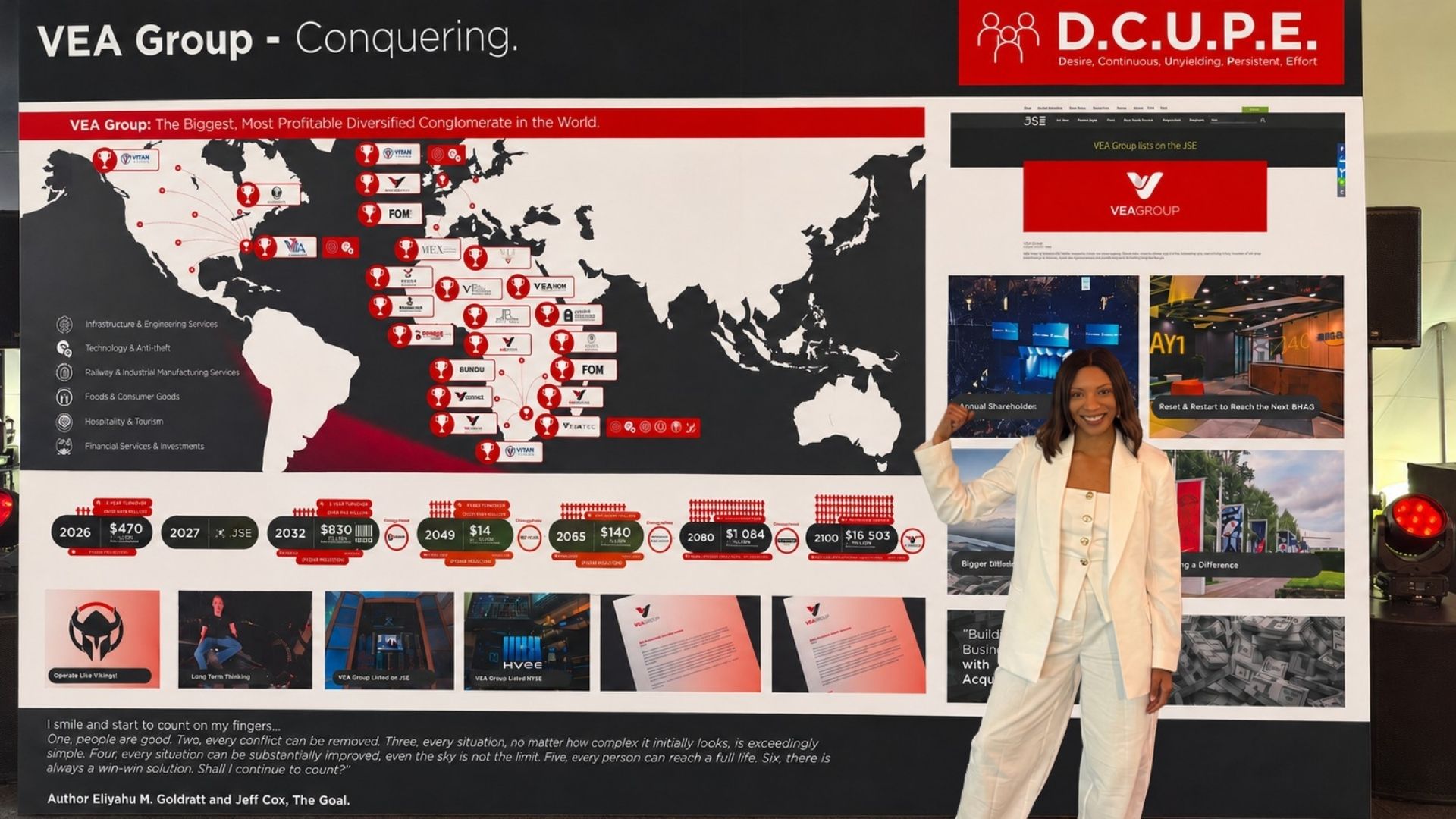
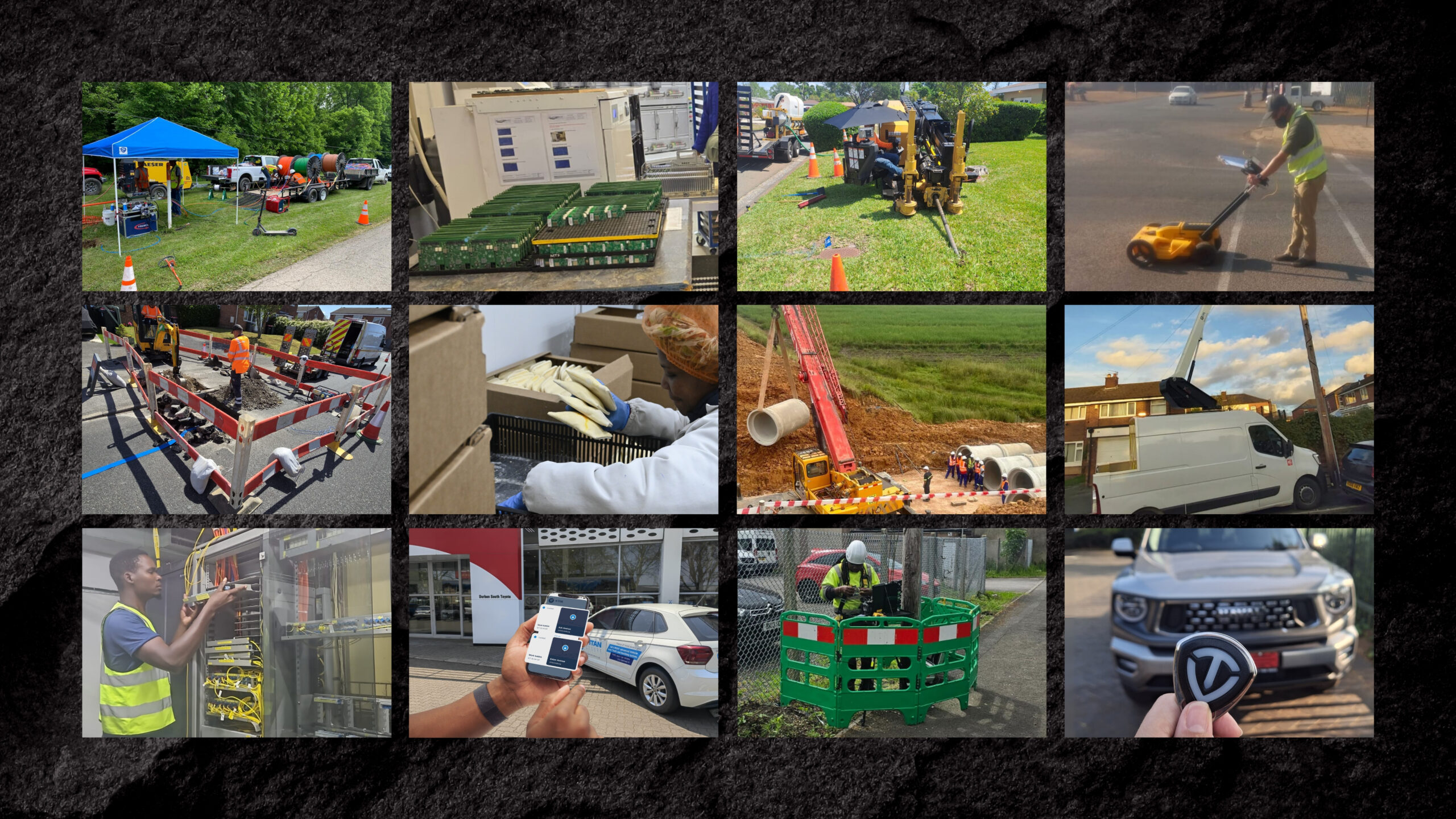
Our approach reflects this broader philosophy. Rather than concentrating resources within a single sector, our organisation has intentionally built capabilities across infrastructure, telecommunications, mobility technology, financial services, food systems, and strategic investment. The objective is not diversification for its own sake, but the creation of interconnected capabilities that strengthen resilience, capital efficiency, and long-term economic participation.
Rather than focusing on a single industry, VEA Group has adopted a diversified ecosystem approach centred around sectors that contribute to broader economic enablement and infrastructure development across Africa, the United Kingdom, and the United States.
Through businesses operating across infrastructure, telecommunications, mobility technology, financial services, industrial solutions, food systems, and strategic investment, the group continues building interconnected capabilities designed to support long-term economic participation and resilience.
This includes businesses such as:
- VEA Connect USA, supporting digital connectivity and telecommunications infrastructure
- Titan Technologies, enhancing mobility intelligence, telematics, and vehicle security systems
- VEA Road Maintenance & Civils, strengthening transport infrastructure and regional accessibility
- VEA Foods, supporting scalable manufacturing and food supply capabilities
- VEA Capital Partners, deploying disciplined capital and operational expertise into high-potential businesses
- VEA Group LTD UK, expanding strategic international growth and cross-border capability
Collectively, these businesses form part of a broader ecosystem designed not simply to participate in industries but to strengthen the foundational systems upon which economies depend.
Explore our entire diversified portfolio: https://veagroup.co.za/portfolio/.
The Future Belongs to Long-Term Builders
Over the coming decades, the organisations most likely to shape economies will not be those operating in isolation but those capable of building interconnected systems that strengthen industries, infrastructure, and economic participation simultaneously. In an increasingly volatile world, resilience is becoming one of the most valuable forms of competitive advantage.
Diversified conglomerates are uniquely positioned to provide that resilience, not only for shareholders but also for industries, communities, and economies as a whole. The future increasingly belongs to long-term ecosystem builders willing to think beyond sectors and invest in the foundational systems that enable societies to grow, adapt, and endure.
Resilient economies are not built by chance. They are built by organisations willing to allocate capital with discipline, operate with long-term vision, and invest in the systems that shape the future.
Learn more with VEA Group insights: https://veagroup.co.za/insights/. Looking to partner? Get in touch with us now: https://veagroup.co.za/investor.